
On Page vs Off Page SEO Explained

Modern online visibility isn’t built on tricks, it never really was. It comes from understanding how search engines actually work and why they show certain pages instead of others. Many businesses rush for quick wins. They try shortcuts that look good for a few weeks but slowly stop working. Real growth takes time. It comes from being clear, staying consistent, and doing things that genuinely help users. In this guide, we talk about on page vs off page seo in a simple, real life way and explain why balancing both is what helps brands grow steadily. As the best SEO agency in Dehradun, we see that every day SEO works best when it’s practical, honest, and focused on results, not buzzwords. Search engines have one main job & that is to show people the best possible answers. To do that, they look at what’s happening on your website and also at how your website is seen outside of it. These two things are closely connected. Together, they shape how strong your SEO really is.
What Is On Page SEO?
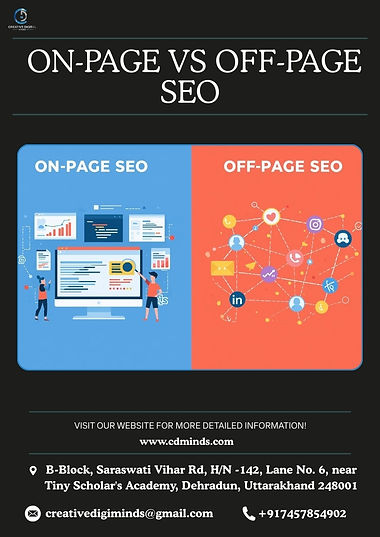
On page SEO is often the first place businesses should start because it lays the groundwork for everything else. If a website is confusing, slow, or poorly written, no amount of promotion will fix that. Search engines want to send users to pages that feel useful and easy to navigate. This means your content should be written for people first, not algorithms. Clear navigation, readable formatting, and meaningful internal links all help visitors find what they need faster. When users spend more time on your site and interact with your pages, it sends positive signals that your content is valuable and relevant.
Content and Structure Matter Most
On page SEO includes everything you can control on your website. Your content, your page layout, your internal links, your images & even how comfortable a visitor feels when they land on your site. Search engines read pages in a very human way, they check if the content makes sense, if it’s relevant, and if it actually helps. Pages written for real people usually perform better than pages written only to rank. Simple URLs, clear headings, and fast loading pages make a big difference. They help search engines understand your message and help users stay instead of leaving after a few seconds.
Technical Elements That Support Rankings
There’s also the technical side, which most visitors don’t notice but search engines definitely do. Mobile friendly design, fast speed, and secure browsing quietly build trust. Tools like Google Analytics, help businesses see what users are actually doing on their site instead of guessing. When on page SEO is done properly, the website just feels right. Nothing feels confusing & broken.
What Is Off Page SEO?
Off page SEO takes place gradually and often feels slower than on page improvements, but its impact is long lasting. It’s built through trust, consistency, and real engagement across the web. When other websites mention or link to your brand, it tells search engines that your content is worth noticing. Even simple actions like being listed on relevant directories or earning honest reviews can strengthen your online reputation. Over time, these external signals help search engines feel more confident about ranking your website higher for competitive searches.
Building Authority Beyond Your Website
Off page SEO is about how your website looks from the outside. Search engines judge trust by checking mentions, links, and conversations happening across the internet. Links from good websites work like recommendations. It’s not about having hundreds of links, it’s about having the right ones. Mentions on blogs, directories, and industry platforms also help show that your site is credible.
Trust Signals and Brand Presence
Off page SEO is more than backlinks. Brand searches, reviews, and social activity all matter. When your brand shows up consistently across platforms, it sends a signal that your business is real and active. Off page SEO takes time but once authority is built, it’s hard for competitors to copy quickly.
Key Differences and How They Work Together
Understanding the difference between on page and off page SEO helps businesses set realistic expectations. On page changes can show results faster, while off page efforts build momentum slowly. When both work together, the impact is much stronger. A well structured website makes it easier for backlinks to pass value, and strong authority helps good content rank higher. Instead of choosing one over the other, businesses that invest in both create a more stable and sustainable SEO strategy that continues delivering results over time.
Control vs Influence
The biggest difference is control. On page SEO is in your hands while Off page SEO depends on how others react to your brand. One helps search engines understand your site while the other helps them trust it. If you focus on only one, things will fall apart. A well optimized site with no backlinks struggles, strong backlinks pointing to a weak site don’t convert either.
Why Balance Is Essential for Growth
Good SEO doesn’t pick sides, it blends both. Content brings people in, authority helps you stay visible. Together, they create a strong base that keeps working even when algorithms change. Before ending, it’s worth mentioning that businesses working with a web designing and development company in Dehradun often see better SEO results because design, speed, and optimization are planned together from day one.
Conclusion
On page and off page SEO don’t compete with each other, they support each other. One improves usability and clarity & other builds trust. When both are done right, businesses grow steadily, reach the right audience, and stay visible in search results over time.


Comments